Some weeks, the news cycle feels like a Mad Libs game written by someone who’s never left their basement. This is one of those weeks.
Between Saturday night and Sunday morning, 64 Holstein calves — each worth between $1,800 and $2,000 — disappeared from a converted turkey barn in Coldwater, Ohio. Not a few. Not a dozen. Sixty-four. Someone rolled up with a semi, loaded 16,000 pounds of future dairy production, and vanished into the night. The Mercer County Sheriff’s Office is reviewing surveillance footage, but so far, no suspects. Just an empty barn and a lot of questions about who has the infrastructure to steal that many calves without anyone noticing.
Meanwhile, in Washington, D.C., the National Park Service confirmed that debris from the White House East Wing demolition — dumped unceremoniously at the East Potomac Golf Links — tested positive for lead, chromium, PCBs, pesticides, and petroleum byproducts. Over 30,000 cubic yards of excavated soil, piled onto a historic public golf course, now sits there like a toxic monument to bureaucratic efficiency. The Interior Department insists everything was tested and passed legal standards. The DC Preservation League, which filed a lawsuit, remains unconvinced.
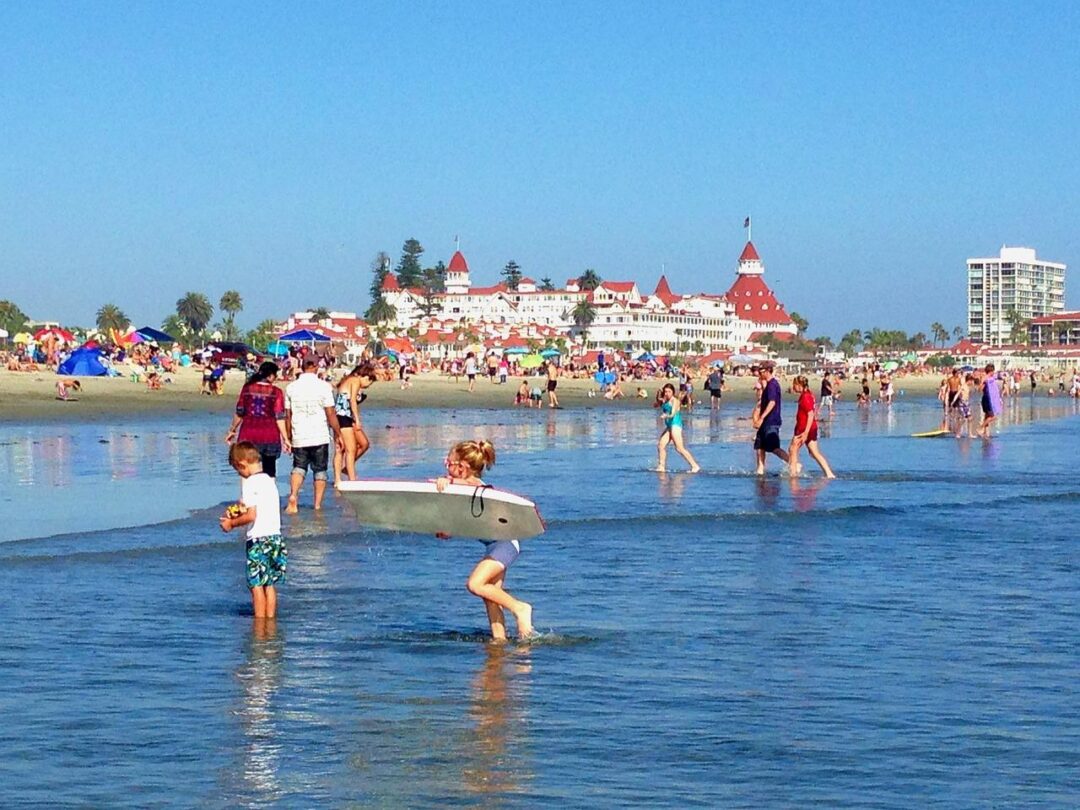
And out in Coronado, California, beachgoers are being told to stay out of the water as roughly 30 million gallons of sewage flow through it each day. The sewage comes from the Tijuana River, which foams up with waste from Mexico before emptying into the Pacific Ocean and drifting along the beaches of southern San Diego County. Yellow signs warn visitors: “Water Contact May Cause Illness.” In 2025, unsafe sewage levels forced officials to close the waters on Coronado beach for 129 days — many of them during peak summer season.
Three stories. No obvious connection. Except maybe this: infrastructure, oversight, and the quiet chaos of things falling apart when no one’s looking.
The Logistics of Stealing 64 Calves
Mercer County Sheriff Doug Timmerman told The Daily Standard that whoever pulled this off knew what they were doing. You don’t just back a pickup truck into a barn and start loading 250-pound calves like they’re bags of mulch. You need a semi. You need experience handling livestock. You need a plan for what to do with 64 freshly weaned Holsteins once you’ve got them.
The calves were in the care of Selhorst Farms, which was transitioning them from liquid to solid feed — a delicate process that requires specific equipment and knowledge. Timmerman’s theory: the thieves either have a buyer lined up or the capacity to raise the calves themselves. Either way, this wasn’t some opportunistic grab. This was planned.
The barn wasn’t even fully emptied — some calves were left behind, which Timmerman thinks means the trailer was full. A full trailer-load of stolen livestock, driven off into the Ohio night, and no one saw a thing.
When the White House Dumps Its Problems on a Golf Course
The East Potomac Golf Links is 105 years old. It’s a public course, open to anyone, and it’s been part of D.C.’s landscape long enough to have its own historical designation. So when the Trump administration decided to use it as a dumping ground for debris from the East Wing demolition, the DC Preservation League noticed.
The interim report from Jacobs Engineering Group Inc. confirmed what preservationists suspected: the soil contains lead, chromium, PCBs, pesticides, and petroleum byproducts — all detected at levels above laboratory reporting limits. The Interior Department insists the soil was tested multiple times and passed all legal standards. The Preservation League’s executive director, Rebecca Miller, pointed out that golfers are literally walking past piles of this stuff mid-round.
The administration’s plan is to renovate the course into a professional-level facility, which would permanently alter its historic character. A federal judge told the government on Monday not to cut down more than 10 trees without prior notice, which suggests the court isn’t entirely convinced this is all above board.
The phrase “toxic metals on a public golf course” should probably raise more alarms than it currently does.
The Poop-nami That Closed a California Beach
Coronado, California, is known for some of America’s best beaches. It’s an upscale resort city where people come to escape. But lately, they’ve been escaping for a different reason: 30 million gallons of sewage flowing through the water each day.
The sewage comes from the Tijuana River, which has been overwhelmed as the city’s population has doubled over the last 30 years, while its sewage infrastructure has remained stuck in the past. The waste foams up, flows into the Pacific, and drifts along the beaches of southern San Diego County. Yellow signs warn visitors. Bacteria levels exceed health standards. The water is off-limits.
Kristin Cohen told the Wall Street Journal she’d been eagerly waiting to bring her daughter, Chloe, into the water, but the warning sign stopped her. “I guess we can’t do that, babe,” she said, before buying her daughter an ice pop as consolation.
Whitney David, a 63-year-old retired surgeon, left Coronado largely because of the sewage. “It was heaven on earth, and now I call it paradise lost,” she said. “All kinds of trash you would see floating in the ocean — food wrappers, bottles, clothing. Once in a while, you would even see a piece of crap.”
The sewage doesn’t just smell. It emits hydrogen sulfide, a toxic gas that can cause asthma attacks, headaches, delirium, cough, skin and eye irritation, and in extreme cases, death. Steve Egger, a 72-year-old Southern California resident, told the Associated Press in April that he and his wife suffer from headaches and wake up coughing up phlegm despite their home being equipped with a hospital-grade filtration system. “Most nights we breathe in a horrible stench,” he said.
Egger’s doctors have told him to move, but he said California is his home. “This is where I’ve lived all my life, with my family, my parents, my grandparents.”
Congress has appropriated over $300 million to address the problem. Officials estimate it could cost $1 billion to solve. Environmental Protection Agency Administrator Lee Zeldin says it could take two years. Since 2018, over 10 billion gallons of raw sewage have poured into the Tijuana River, leaving tens of thousands of people exposed to it.
The Thread That Ties It All Together
On the surface, these three stories have nothing in common. But strip away the specifics, and you’re left with the same underlying theme: systems that depend on someone paying attention — and the consequences when no one does.
In Ohio, someone with the means and the knowledge to move 64 calves operated undetected. In D.C., the federal government dumped contaminated soil on a public golf course and called it compliant. In California, a beach known for its beauty is now a sewage dump, and the fix is years and a billion dollars away.
None of these things should happen. But they did. And they’ll keep happening as long as the infrastructure — physical, regulatory, and otherwise — continues to fray at the edges while everyone pretends it’s fine.
It’s not fine. It’s Whacky Wednesday. And next week, there’ll be three more stories just like these