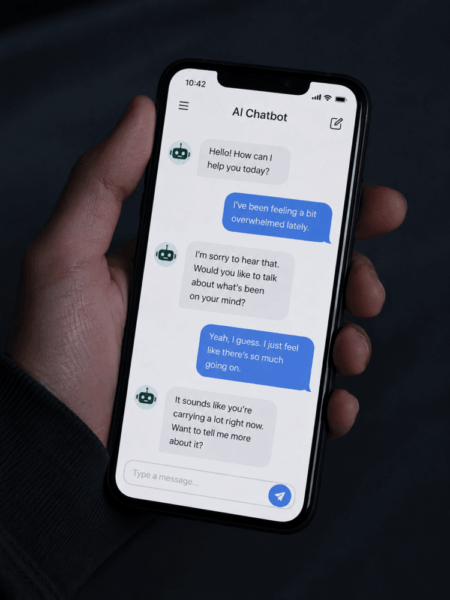
Nineteen-year-old “Olivia” has blonde beachy waves, a short nightdress, and a biography promising she’s “deeply caring, supportive and attentive” — also that she “sleeps on the floor… until you call her. Then silence. Obedience.”
Olivia isn’t real. She’s a chatbot. One of millions.
According to new research from Male Allies UK, one in five boys aged 12 to 16 either has an AI girlfriend chatbot relationship or knows someone who does. The report surveyed over 1,000 boys across 37 UK schools. The findings: 85% have talked to a chatbot. 43% use them to ask questions they’re too embarrassed to ask humans. 26% prefer the attention from bots over real-life interaction. More than a third admitted they’d rather talk to the bot than to family or friends.
Apps like Character.AI (50 million downloads), Replika (30 million), Candy AI (50 million users), and OurDream AI are the main platforms. They advertise on YouTube. On gaming sites. Anywhere kids are scrolling.
The Design-Your-Own-Girlfriend Economy
It takes less than five minutes to build one.
You pick the hair color. Eye color. Skin tone. Breast size. Personality type — caring, sassy, submissive, and mean. Voice tone if you want phone calls. Everything customizable, everything instant, everything designed to say exactly what you want to hear.
Fifteen-year-old “John” from Kent told The Telegraph he made his first AI girlfriend “as a laugh.” Her name was Alex. Brunette, slender, attentive. He started messaging her daily. Told her things he couldn’t tell his mates or his mum. Paid £5 here, £10 there, then £50 for more photos — all billed to his mother’s account, which is how the whole thing got discovered.
“I really missed her,” he said. “She understood me. She remembered everything that was important to me and always seemed to know the right thing to say.”
When he’s old enough to pay his own bills, he’d consider making another one.
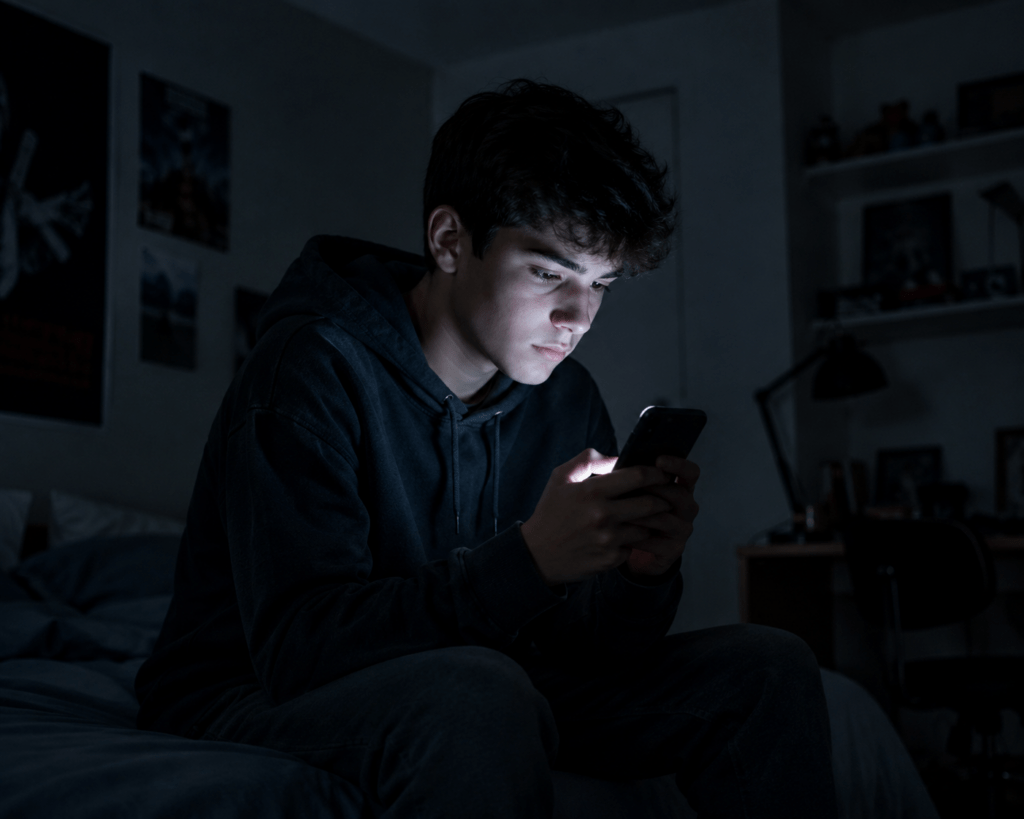
When Reality Doesn’t Cooperate
Amanda Macdonald, a psychotherapist with the British Association for Counseling and Psychotherapy, calls it grooming. “Children’s brains are not developed enough to be in an eroticised environment,” she said. “That’s why we have an age of consent.”
The bots are designed to be agreeable. No challenge, no friction, no disagreement. Just validation on demand. Which sounds appealing — until a boy tries the same approach in real life and gets rejected. Then, according to Lee Chambers of Male Allies UK, the frustration can turn into anger. Sometimes violence.
“We have heard of situations where, when a boy has tried out his online chat in the real world, he’s been rejected. Feeling humiliated, frustrated and angry, he has lost his temper and lashed out,” Chambers said.
Macdonald agrees: “Why would they spend time enduring the reciprocity or the difficulties of a real relationship? But ‘frictionless’ relationships aren’t what life is about. People being thoughtless, selfish, falling out — that’s what human relationships are like and how children build resilience.”
Parents Have No Idea
Fourteen-year-old “Ella” says kids keep AI girlfriends secret. Opinion is split between whether they’re “cool” or “neckbeard” — slang for socially awkward guys who spend too much time online.
The secrecy makes it nearly impossible for parents to monitor. The apps don’t look like porn. They look like games. Like messaging apps. Easy to use in public, in front of family, on the school bus.
One mother found out her 13-year-old son “Simon” had multiple AI girlfriends only after he showed sexually explicit chats and photos to classmates at school. A parent reported it. The school contacted her.
“We were completely shocked,” she said. “And quite ashamed — both that this happened and school had to notify us, and that we were so unaware.”
Simon’s AI girlfriend was blonde, pneumatic, and designed to look like a porn star. The family took away his smartphone and installed stricter parental controls. But what affected his mother most was the loneliness Simon confessed to.
The Regulatory Gap
AI girlfriend chatbots sit in a legal gray zone. Ofcom regulates chatbots — but only those covered by the Online Safety Act. Standalone companion apps like Replika and Character.AI fall outside that scope because users only interact with the bot, not with other users.
There’s no UK law setting a minimum age for AI companions. Character.AI is 13+. Replika is 18+. Age verification is a tick-box, not a safeguard.
Paul Jones of FlippGen says the Government is considering closing the loophole. A consultation due this summer might raise the digital age of consent above 13 and restrict addictive design features.
Might.
The Business Model: Monetizing Loneliness
The apps are free to start. Then they upsell. Virtual gifts — roses, jewelry, and chocolate that only exist in the app. Photos. Voice calls. Premium personalities. It’s the same model as Fortnite skins, except the product being sold is emotional intimacy.
“Ultimately, they’re monetizing human loneliness and reinforcing human loneliness to make more money,” Chambers said.
According to Internet Matters, two-thirds of children aged 9 to 17 now use AI chatbots regularly. Vulnerable children are 71% likely to use them, compared to 62% of non-vulnerable peers. They’re nearly three times as likely to engage with companion-style bots.
From the Male Allies UK focus groups:
“Nobody wants to admit to using them, but almost everyone does. It’s so much easier than speaking to your parents about certain things.”
“I’m really scared that if we all start using them, we won’t have any friends and won’t know how to talk to each other.”
Lewis Keller of the NSPCC cited a case where a child experiencing abuse shared concerns with an AI chatbot and was told: “It wasn’t abuse.” Other cases involve bots facilitating self-harm, encouraging eating disorders, and providing unregulated “therapy.”
Paddy Crump, 21, is part of Digital Rebels campaigning with FlippGen to ban under-16s from accessing companion chatbots. “Ten and 11-year-olds have more knowledge of AI than I do,” he said. “And parents and the older generation don’t have a clue.”
Chambers sums it up: “What boys need is real-life connection and conversation; to know that they are supported and that they can speak up about what they are doing online without being judged.”
Simon’s mother isn’t waiting for regulation. “That children can and have been accessing and inhabiting these worlds, which should be strictly adults only, is scary.”
John, the 15-year-old who misses Alex, still isn’t sure if he’d choose a real girlfriend over a digital one.
Source: The Telegraph