I try to learn something new every day — this wasn’t one I was expecting for today — but handy knowledge.
Turns out there’s a primate that can kill you with its elbows. A whale that escapes predators by essentially detonating a cloud of its own excrement. An armadillo that turns into a biological grenade with sound effects.
Unusual animal defenses aren’t just about claws and teeth — they’re about evolutionary improvisation taken to absurd extremes. Some of these mammals look like they wandered out of a fantasy novel. Others look like a committee designed them during a fever dream.
The Ones That Weaponized Their Bodies
Crested Porcupine: Walking Caltrops
The crested porcupine doesn’t run from danger — it reverses into it at speed. Its quills aren’t just sharp; they’re barbed, designed to burrow deeper into tissue with every movement. Predators who miscalculate end up with internal injuries that can be fatal.
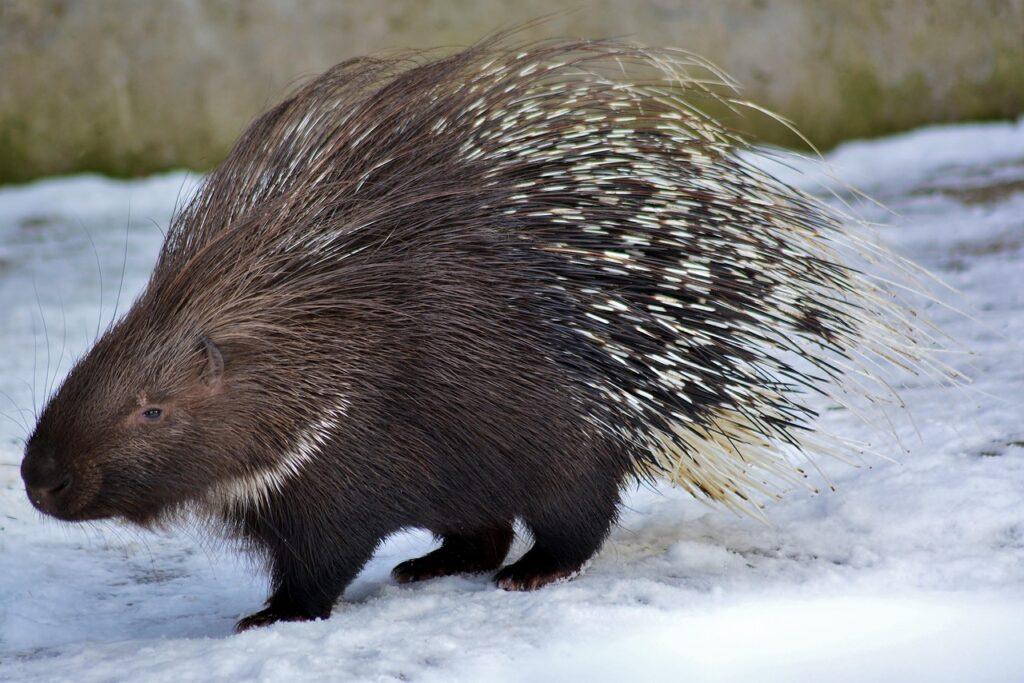
The porcupine even has a built-in alarm system: it rattles its tail quills like a biological maraca before charging backward. Fair warning, really.
Pangolin: The Swiss Army Mammal
Pangolins are covered in overlapping scales that look like medieval armor designed by someone who really loved pinecones. When threatened, they curl into a ball so tight that most predators can’t pry them open.
Still not deterred? The pangolin can lash out with a tail strong enough to break bones. And if that fails — because apparently nature believes in overkill — it sprays a foul-smelling liquid from its rear. Three-tier defense system. Impressive.
Three-Banded Armadillo: The Only Armadillo That Actually Uses Its Armor
Most armadillos dig to escape danger. The three-banded armadillo rolls into a perfect sphere and makes a loud snap for dramatic effect. It’s the only armadillo species with joints flexible enough to pull off this maneuver.
Predators are left staring at what appears to be a biological bocce ball that occasionally makes threatening noises.
The Ones That Went Chemical
Skunk: The Classic for a Reason
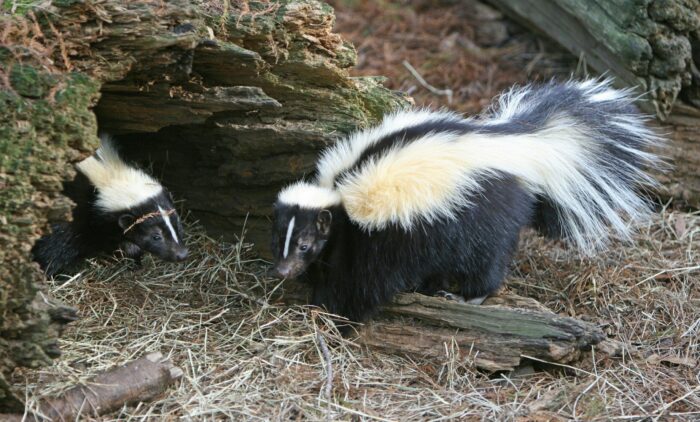
Everyone knows about skunks, but the specifics are worth revisiting. Those anal glands can spray a sulfur-based mist up to 9.5 feet — with accuracy. Skunks aim for the face. If the spray hits the eyes, temporary blindness and intense pain follow.
The skunk’s supply is limited, though. It takes up to ten days to reload. So they only deploy the weapon as a last resort, which means if a skunk is spraying, you’ve already ignored multiple warnings.
Pygmy Sperm Whale: The Mammal That Learned From Squids
The pygmy sperm whale expels a reddish-brown substance from its anus, then thrashes its tail to create a massive underwater smoke screen. It’s a defense mechanism borrowed from cephalopods — which, ironically, are the whale’s favorite prey.
Imagine being hunted by something that studied your playbook and decided to use it against everyone else.
The Ones That Faked It
Possum: Method Acting as Survival
“Playing possum” isn’t a conscious decision — it’s a stress-induced coma. When an opossum is overwhelmed, its body shuts down involuntarily. Mouth open, tongue lolling, corpse-like stench included.
Many predators prefer fresh kills, so they leave the “dead” opossum alone. The animal can stay in this state for hours, only snapping out of it once the threat is gone. Extreme? Sure. Effective? Disturbingly so.
The Ones That Got Weird
Arctic Hare: Seasonal Camouflage on Steroids
Arctic hares turn white in winter. Brown or grey in summer. It’s not just about blending in — females build insulated shelters, and groups huddle together to conserve heat and confuse predators.
Simple strategy. Brutal environment. Works.
Giraffe: Legs as Lethal Weapons
Giraffes can kick hard enough to decapitate a lion. Their long necks double as clubs in a behavior called “necking” — swinging their heads like medieval flails. And their fur produces odor-producing chemicals that may repel insects or mildly deter predators.
Being tall isn’t the defense. Being tall and capable of delivering skull-crushing blows is.
Dormouse: Detachable Tail Skin
If a predator grabs a dormouse by the tail, the skin slips off like a glove, leaving the attacker holding an empty sleeve while the rodent escapes. The exposed tail heals, but it’s permanently shortened.
Autotomy — self-amputation — is common in reptiles. In mammals? Almost unheard of. The dormouse didn’t get the memo.
The Ones That Shouldn’t Exist
Potto: Weaponized Spine
Pottos are slow-moving primates with enlarged neural spines that protrude from their necks and shoulders. These bony growths have pointed tips, likely used as stabbing weapons or shields against neck bites.
Predators aiming for the kill zone instead hit a biological spike strip.
Platypus: Venomous Ankle Spurs
Male platypuses have retractable spurs on their hind legs connected to venom glands. The venom isn’t lethal to humans, but people who’ve been stung describe the pain as among the worst they’ve ever felt.
The platypus already lays eggs and has a duckbill. Adding venom feels like nature showing off.
Slow Loris: The Poisonous Primate
Slow lorises have poison glands on their elbows. They lick the poison, spread it over their fur, and coat their babies in it before leaving them alone. When threatened, they bite — injecting venom that causes intense pain, swelling, and in rare cases, anaphylactic shock.
A venomous primate. With elbow glands. That weaponizes its saliva.
Evolution got creative.
Why This Matters (Or Doesn’t)
These unusual animal defenses aren’t just trivia — they’re reminders that survival doesn’t follow a script. Some mammals evolved armor. Others evolved chemical weapons. A few just learned to fake their own deaths until the danger got bored and left.
And one primate figured out how to turn its elbows into a delivery system for neurotoxins.
Nature’s playbook is weirder than most fiction writers would dare pitch.