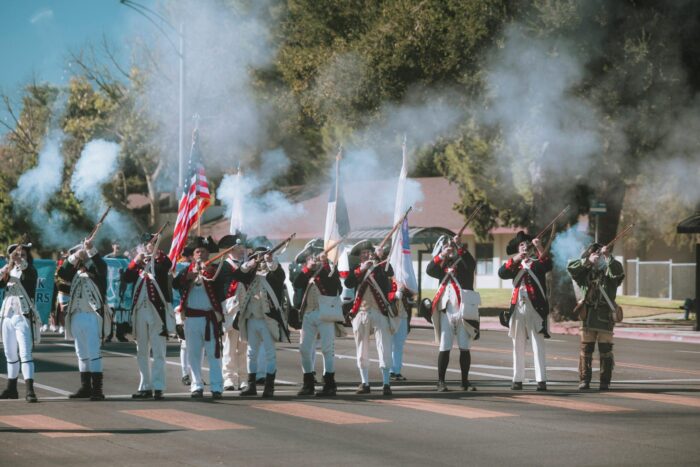
Colorado Springs, July 4, 1976. Eleven years old. Standing in line to sign a ledger — name, age, city. Farmington Hills, MI. The oldest sibling, the one trusted to write legibly, the one who did the math: if I live to 111, I’ll come back for the Tricentennial. The idea wasn’t morbid or aspirational — it was obvious. America would still be here. So would Colorado Springs. So would the ledger, probably, archived in some climate-controlled vault alongside the Constitution and a moon rock.
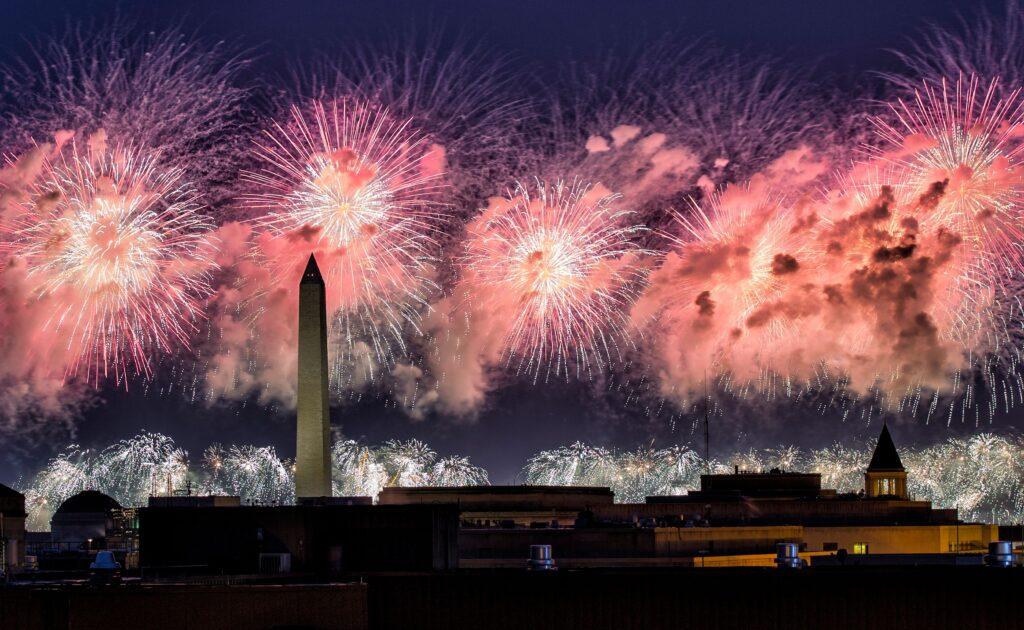
The sense of American exceptionalism decline wasn’t even a phrase back then. It was just air.
You didn’t question it. You felt it in the fireworks, in the marching bands, in the way strangers smiled at each other like they were all in on the same secret. Pride wasn’t performative — it was reflexive. The country was 200 years old, and it felt like it was just getting started.
Fast-forward 25 years. September 11, 2001. Working in New York City radio. The tower went down — ours, along with close to 3,000 souls. Watched it live. In person. Several people I knew perished. The sense of American pride that followed was overwhelming, almost primal. Flags everywhere. Strangers hugging. Blood donation lines around the block. For a few weeks, maybe a few months, the country felt like it did in 1976 — unified, defiant, exceptional.
And then it didn’t.
The Numbers Tell a Story We Already Know
The AP-NORC poll dropped recently, timed to coincide with the America 250 celebrations. Only about one-quarter of Americans now say the U.S. stands above all other countries. About 3 in 10 say there are better countries — up from 19% in 2016. Among Americans under 30, that number jumps to 44%.
Translation: nearly half of young Americans think the country their grandparents fought for, built, and mythologized is… fine. Middling. One option among many.
The poll also found that only about two-thirds of U.S. adults now say a democratically elected government is “extremely” or “very” important to the nation’s identity — down from 80% in 2021. Democracy itself, the thing we used to export at gunpoint, is now seen as negotiable.
A 24-year-old from Alabama told pollsters the problem isn’t democracy itself — it’s the people getting elected. The system was designed with safeguards, she suggested, but those guardrails only work if the people inside the machine actually enforce them. The founders, she figured, would be pretty disappointed with how things turned out.
Pretty disappointed. Not outraged. Not heartbroken. Just… disappointed.
The American Dream — Now With Asterisks
About half of U.S. adults now say the American Dream “once held true but does not anymore.” Only 22% of Americans under 30 believe it still holds true, compared with 46% of those 60 and older.
A 31-year-old caregiver in Atlanta hears stories from her elderly clients about buying houses on their first regular paychecks in their 20s. They can’t believe the obstacles her generation faces. She recently gave up her own apartment and moved into a rented room just to save money. The Dream didn’t evaporate — it just became unaffordable.
A 27-year-old software developer in Denver said his faith in meritocracy shattered when he watched his engineer husband struggle to find work. Hard work, it turned out, doesn’t guarantee anything. It just gets you in the door — assuming the door’s still open.
The Dream didn’t die. It just moved — offshore, behind paywalls, into the hands of people who already had it. The ladder’s still there. The rungs are just farther apart now.
The Partisan Divide — Or: Who Gets to Be Proud
Republicans are much likelier than Democrats to see the U.S. as exceptional. About half of Republicans say the U.S. stands above all other countries, compared with only 7% of Democrats. Most Republicans — 57% — say the American Dream still holds true, compared with 17% of Democrats.
A 28-year-old financial planner in Wisconsin — a Republican — told pollsters the Dream is still accessible for people willing to work for it. He called the country a great experiment and a meritocracy where the best ideas and work ethic win out regardless of background. He and his wife plan to watch fireworks over the lake for the 250th anniversary.
A 70-year-old caregiver in San Antonio — a Democrat — said there’s a palpable tension just beneath the surface, especially directed at Hispanic communities. She knows people who’ve started carrying immigration papers just in case they’re challenged. Celebrating feels complicated when so much hostility is aimed at immigrants and communities of color. If her naturalized citizenship is contested, she said, her 93-year-old mother — who’s lived in the U.S. since she was 4 — might have to leave.
Two people. Same country. Same anniversary. Completely different realities.
What Changed — And What Didn’t
The distance between July 4, 1976 and today isn’t measured in years. It’s measured in collapsed certainties. The belief that the system works. That the Dream is accessible. That the country is, by definition, better than everywhere else.
In 1976, you didn’t need a poll to tell you America was exceptional. You just knew. In 2001, after the towers fell, you felt it again — briefly, desperately, instinctively.
Now? Now it’s a poll question.
The fireworks are still there. The ledgers, probably too. But the thing that made people sign them — the belief that this place, this experiment, was worth coming back to in a hundred years — that’s harder to find.
Maybe it’s still there. Maybe it’s just buried under decades of broken promises, rigged systems, and the slow realization that the guardrails were never as strong as we thought.
Or maybe it was always contested, always fragile, and we’re just now admitting it.
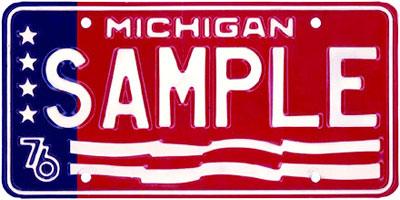
We Had This License Plate.
Source: AP News