I studied meteorology during my four years in college, as I have written about before. As I have stated, I was terrible at actually predicting the weather — but I learned enough to know when something genuinely fascinating is happening. And right now that “something” is happening, in the Pacific Ocean.
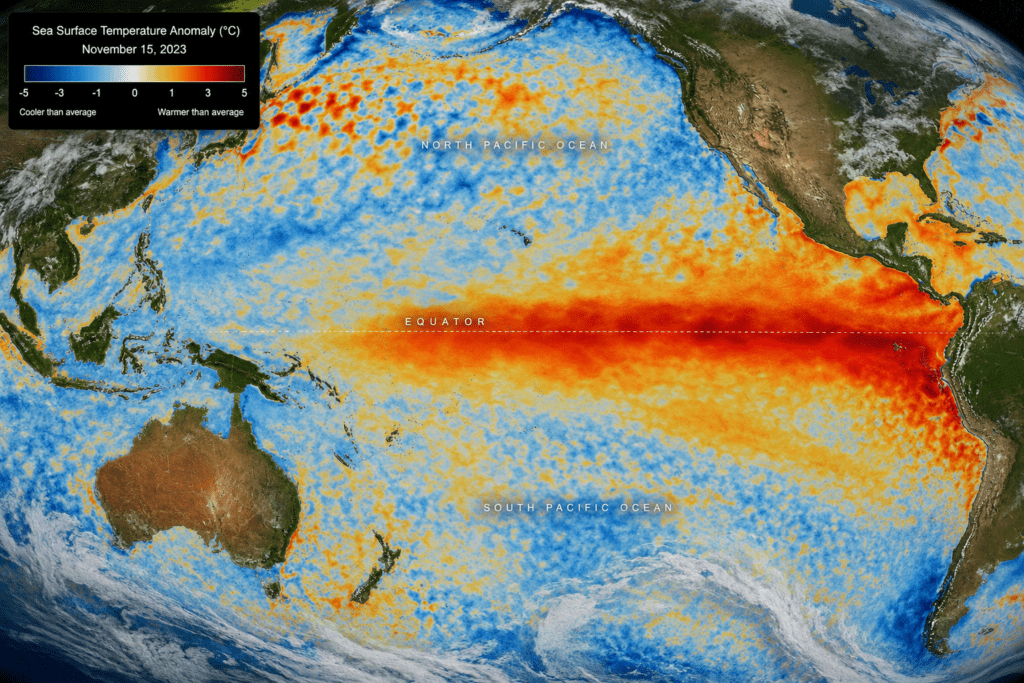
The World Meteorological Organization is warning that what could be the strongest El Niño on record is building near the equator and could peak in September. This isn’t your garden-variety oceanic heatwave. The ripple effects won’t stop at droughts and storms. We’re talking about food shortages, price spikes, migration surges, and conflict-zone flare-ups.
So this is your heads-up. Not a panic button — a nudge to start paying a little more attention to the weather forecasts. Because complacency is a luxury we can’t afford when the Pacific starts throwing its weight around.
What Makes This One Different
El Niño happens every few years when warm water pools in the central and eastern Pacific, disrupting global weather patterns. Sometimes it’s mild. Sometimes it’s catastrophic. This one is shaping up to be the latter.
The 2015-2016 El Niño devastated southern Africa, caused maize harvests to collapse in South Africa, and forced the country to import millions of tons of grain. Food prices soared. Communities starved. And that was before global supply chains were as fragile as they are now.
This time, the stakes are higher. Fertilizer prices are already elevated thanks to the closure of the Strait of Hormuz — which used to transport nearly a third of the world’s fertilizer. Add a monster El Niño into the mix, and you’ve got overlapping shocks that could amplify inflation and destabilize food systems worldwide.
Dr. Mike Rivington of The James Hutton Institute put it bluntly: “Every time you get a shock or an extreme weather event, it makes you less resilient for the next one. We’re having to run faster and faster to stand still with food production.”
The Ripple Effects: Food, Migration, and Conflict
Food Supply Disruption
El Niño doesn’t just mess with rainfall — it messes with everything. Droughts in Australia, southern Asia, and southern Africa. Violent storms and flooding across parts of the Americas — including the United States. Weakened monsoons in India, which could slash grain production.
And because just three crops — rice, wheat, and maize — account for 60% of the world’s calorie intake, even modest production shortfalls can trigger sharp price increases. Markets will hedge their bets, build up reserves, and prices will climb.
For Americans, that means higher grocery store costs. We’ve already seen food inflation driven by supply chain disruptions and geopolitical tensions. A record-breaking El Niño could compound those pressures within 12 to 18 months.
Dr. Rivington added: “The markets themselves can exercise some control and caution in terms of not holding resources and thinking about how they may release reserves to make sure there’s a steady flow of food.”
Translation: They can. Whether they will is another question entirely.
Increased Migration — Including at Our Southern Border
Severe droughts don’t just destroy crops — they displace people. In Central America’s “dry corridor,” which spans parts of Guatemala, Honduras, El Salvador, and Nicaragua, El Niño typically brings devastating drought. Crop failures force subsistence farmers to abandon rural areas and move to cities in search of work.
Most climate-related migration happens within countries, not across borders. But there are exceptions — and Central America is one of them.
When drought wipes out harvests and livestock, rural communities collapse. Young people leave. Families leave. Some head to cities. Others head north.
Prof. Paul Behrens, an environmental scientist at the University of Oxford, said it plainly: “People generally don’t want to leave their homeland. Things have to become really bad before people move.”
Syria’s prolonged drought from 2006 to 2010 — influenced in part by El Niño — forced 1.5 million people from rural areas into cities like Damascus and Aleppo. The civil war erupted shortly after, and more than 1.3 million Syrians eventually fled to Europe.
The pattern repeats. Drought, displacement, migration.
In eastern Africa, El Niño often brings above-average rainfall rather than drought — which sounds better until you realize it can mean floods that wash away homes and displace hundreds of thousands of people. Different disasters, same outcome.
Conflict Zone Flare-Ups
In fragile states, extreme weather doesn’t just strain resources — it weaponizes them. In Yemen, water infrastructure has been repeatedly damaged or disrupted during the conflict, leaving communities vulnerable to shortages. In teh Sahel region of North Africa, droughts have long fueled food insecurity, displacement, and violent extremism.
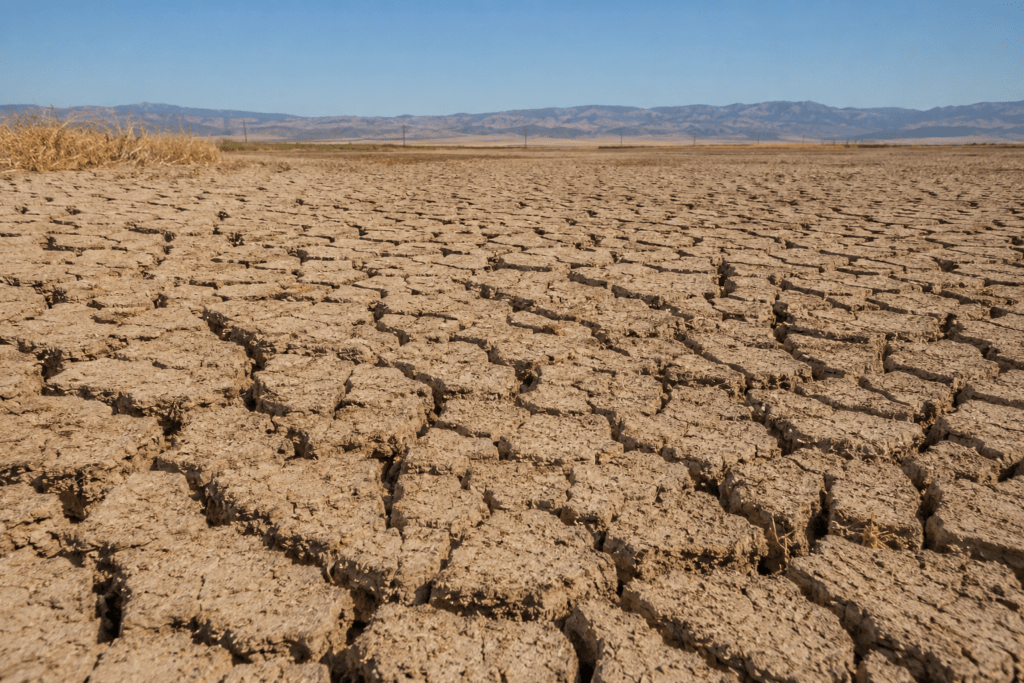
A strong El Niño could tighten the pressure even further. In South Sudan and Mali, where agriculture and livestock herding dominate the economy, drought can wipe out crops, kill livestock, and create widespread unemployment among young men — prime recruitment conditions for armed groups.
Across East Africa, shifting rainfall patterns have forced remote communities to move livestock into agricultural areas, increasing competition over land and water. When resources shrink, tensions rise.
What This Means for Americans
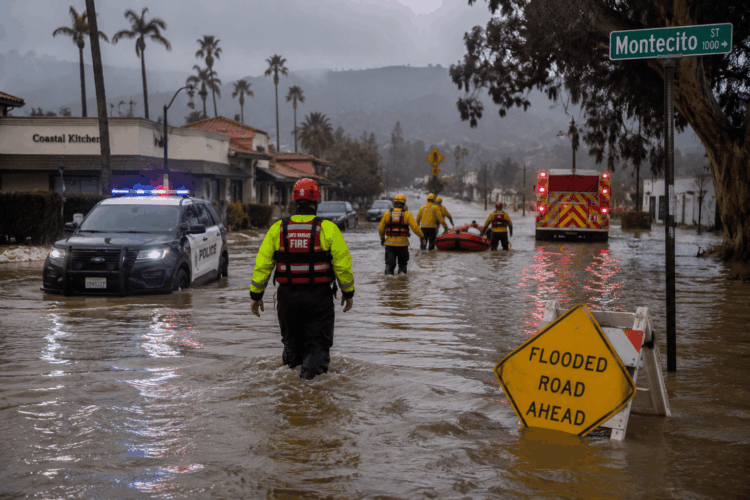
We’re more than 8,000 miles from the tropical Pacific, but distance doesn’t insulate us from the consequences. Violent storms and heavy rainfall are expected across parts of the Americas during this El Niño cycle — which means flooding, infrastructure damage, and agricultural disruption right here at home.
California, in particular, has a complicated relationship with El Niño. Sometimes it brings desperately needed rain to drought-stricken regions. Sometimes it brings catastrophic flooding and mudslides. The 1997-1998 El Niño caused billions of dollars in damage across the state.
But the bigger impact might be economic. Higher food prices. Strained supply chains. Increased migration pressure at the southern border. Political instability in regions where American interests are at stake.
Prof. Behrens put it simply: “It is affecting the price of our food, and therefore affecting our politics.”
Which is a polite way of saying: When people can’t afford to eat, governments get nervous.
The Takeaway: Don’t Be Complacent
I’m not suggesting you stockpile canned goods or start building an ark. But I am suggesting you start paying a little more attention to the weather — not just the five-day forecast, but the bigger patterns. The ones that shift food prices, strain supply chains, and destabilize entire regions.
El Niño has been causing weather-related disasters for centuries. It’s thought to have contributed to the collapse of Peru’s ancient Moche civilization in the eighth century. More recently, it triggered the famine of 1877-1878, which killed millions across the tropics and exposed deep inequalities in the global food system.
No one can predict precisely who the winners and losers of 2026’s El Niño will be. But it’s clear from experts’ warnings that the effects will be widespread — and for some, devastating.
So follow the weather. Just a little more. Because the Pacific is heating up, and the world is about to feel it.