The grill’s out. The beer’s cold. Somewhere between the potato salad and the third inning, Memorial Day became another long weekend — which is fine, except it wasn’t supposed to be just that.
Because Memorial Day’s meaning hasn’t changed, even if everything around it has.
We’re living in a country where people can’t agree on basic facts, where every holiday gets weaponized, and where even saying “thank you for your service” can feel performative. But Memorial Day sits apart from all that noise. It’s not about politics. It’s not about which side you’re on. It’s about the people who didn’t come home.
The Names We Don’t Say Enough
My father served. So did my uncles. My great uncles, too — the kind of men who didn’t talk much about what they’d seen, who came back different and carried it quietly. Three of them never came back at all. Three great uncles who made the ultimate sacrifice, whose names get spoken once a year if we’re lucky, whose photographs sit in frames that nobody dusts often enough.
That’s the thing about Memorial Day — it’s personal before it’s patriotic.
Every family’s got a version of this story. The uncle who landed at Normandy. The cousin who didn’t make it out of Vietnam. The neighbor’s kid who came home in a flag-draped box from Iraq or Afghanistan. These aren’t abstractions. They’re people who had favorite songs, bad jokes, and plans for after the war.
They’re the reason Memorial Day still matters, even when the country they died for can’t seem to agree on anything.
What We Owe (And Can’t Repay)
There’s a debt here that doesn’t get smaller with time. It doesn’t get negotiated down. It doesn’t care about your voter registration or your Twitter feed or whether you think the war was justified.
Someone died so you could argue about it.
That’s not melodrama — that’s the actual transaction. The freedoms we take for granted, the ones we use to tear each other apart online, were purchased with blood. Not metaphorical blood. Real blood, from real people, who were scared and far from home and did it anyway.
My great uncles didn’t die for a political party. They died for the idea that this experiment might work — that a country built on argument and compromise and messy democracy could hold together. That their families back home would have a future worth living.
Why Memorial Day Refuses to Be Polarized
Here’s what’s remarkable: Memorial Day hasn’t been captured by either side of our endless culture war.
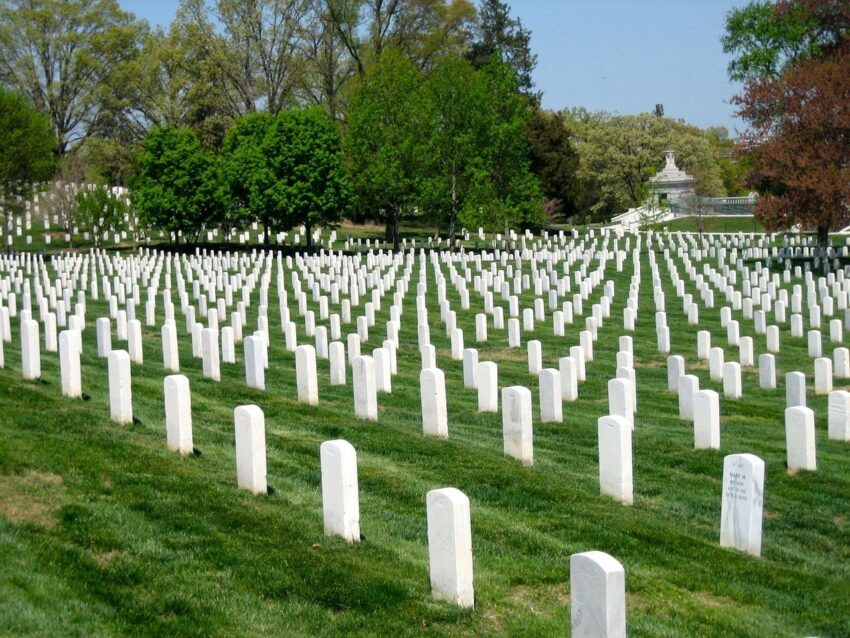
Nobody’s selling Memorial Day merch with slogans. Nobody’s trying to cancel it, reclaim it, or turn it into a referendum on foreign policy. It just sits there, solemn and unmoving, like a stone marker in a military cemetery.
Because you can’t spin sacrifice.
You can argue about why they were sent. You can debate the wars themselves — and we should. But you can’t argue about what it cost the people who went. You can’t politicize a folded flag handed to a mother who’ll never stop waiting for her son to walk through the door.
That’s the Memorial Day meaning that endures: it’s about the cost, not the cause.
The Quiet Rituals That Hold
There’s something almost defiant about the way Memorial Day gets observed. The parades in small towns where three generations show up. The veterans in their caps, older every year, standing at attention while a teenager plays Taps. The families who visit graves, leave flags and flowers, and stand there longer than they planned.
These aren’t performances. They’re acts of remembering — which is the only thing we’re asked to do.
No hot takes required. No virtue signaling. Just acknowledgment that some people gave everything, and the least we can do is not forget.
To My Family — And Yours
So here’s to my father, my uncles, my great uncles. To the three who never came home — whose names I carry, whose service I can’t repay, whose sacrifice makes every argument I have possible.
Thank you doesn’t cover it. It never will.
But it’s what we’ve got, and it’s what Memorial Day asks of us: to remember, to honor, to carry forward the idea that some things are worth defending, even when the country feels like it’s coming apart at the seams.
Because Memorial Day still matters.
Not because we’re perfect. Not because every war was righteous. But because the people who served believed in something bigger than themselves — and some of them died for it.
That’s not a political statement. That’s just the truth, standing there in a cemetery, waiting for us to show up.