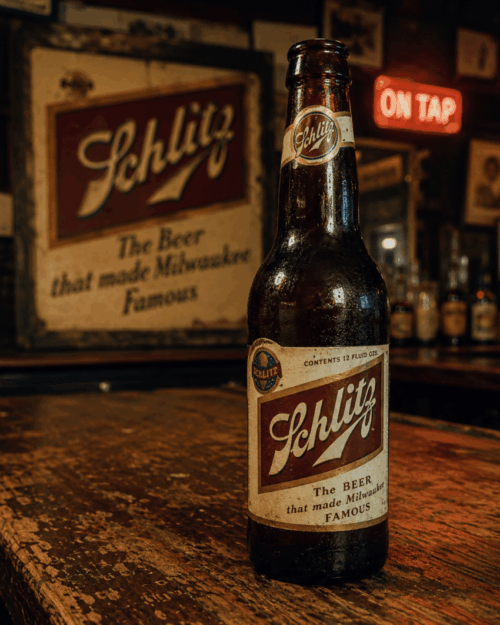
Schlitz beer has been discontinued. Three words that sound impossible for anyone who’s spent time in a Milwaukee dive bar, ordered a pint for $3.50, and felt connected to something older than themselves.
Pabst Brewing Company stopped making Schlitz months ago — the brand that once dominated American brewing, that literally kept Chicago hydrated after the Great Fire, that turned Milwaukee into a beer capital. Gone. Not because it tasted bad or because millennials rejected it. Because production minimums at a Busch plant in Texas made it financially unviable.
The volume dropped. The math didn’t work. The brand fell below the threshold that Budweiser required for contract brewing. End of story.
When a Beer Brand Becomes a Lifeline
Founded in 1849, Schlitz Brewing Company wasn’t just another brewery — it became the largest in America by the early 1900s. After the Great Chicago Fire in 1871, the city’s water supply turned toxic. Schlitz shipped beer by the trainload. People drank it because they had no clean alternative.
Joseph Conforti, general manager of Milwaukee Brat House, told WISN: “They didn’t have clean drinking water, so they were drinking Schlitz beer.”
That’s the origin story — a beer that saved lives during a disaster, then became a cultural artifact, then became a nostalgia product sold at tourist-heavy bars during the Republican National Convention.
The Slow Fade of a Milwaukee Icon
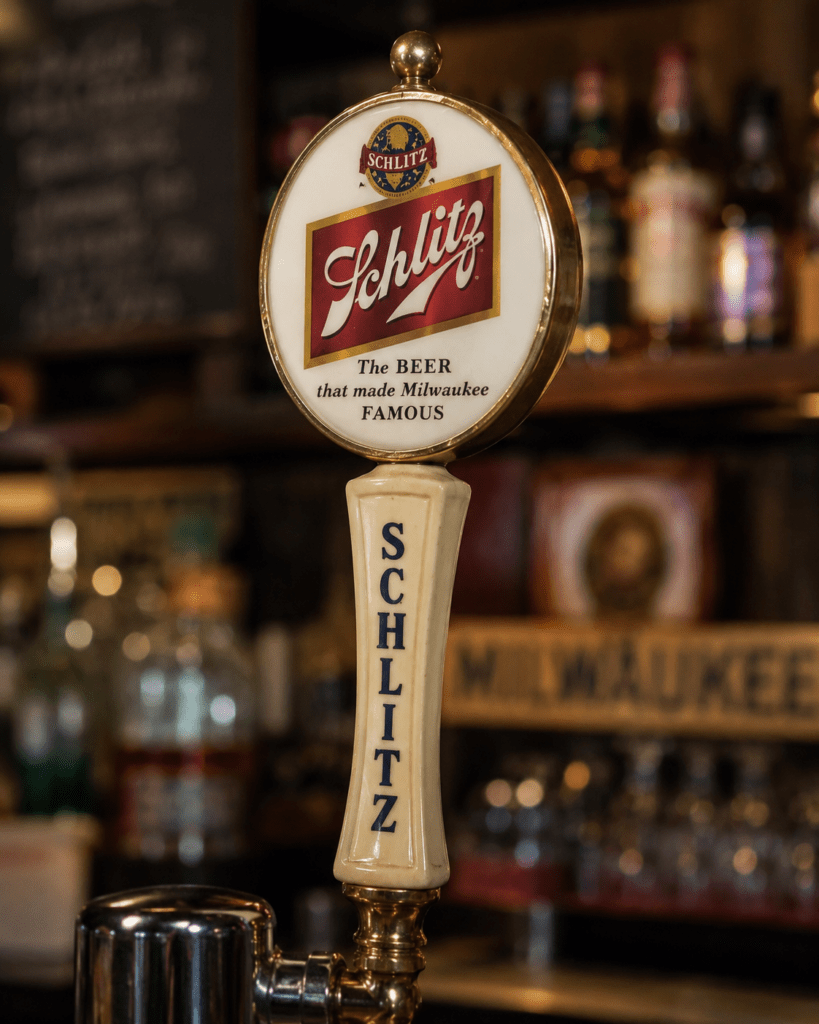
Schlitz stayed on tap at local spots like Milwaukee Brat House, Schlitz Park, and scattered dives across Wisconsin. Tourists ordered it. Locals ordered it, ironically at first, then sincerely. It represented a simpler time — back when Milwaukee meant beer, not tech startups or luxury condos.
“It’s a nostalgia factor,” Conforti said. “People from out of town are surprised that they still make it.”
Past tense now.
Two months ago, Conforti got the call from his sales rep. The brand was being retired. Pabst had already stopped brewing it. The remaining kegs would be the last.
Production Minimums and the Economics of Legacy Brands
Kirby Nelson, brewmaster at Wisconsin Brewing Company, explained the mechanics: “Schlitz volume had dropped to the point where Pabst has a Busch plant in Texas do their brewing for them. The minimum quantities that Budweiser required, the brand fell way below that, so they had to retire it.”
Translation: Schlitz couldn’t justify the production run. The brand wasn’t dead because people hated it — it died because not enough people cared.
Pabst owns dozens of legacy brands. Some thrive. Some limp along. Some fall below the line where contract brewing makes sense. Schlitz crossed that line.
One Last Batch — With Dignity and Respect
Wisconsin Brewing Company got permission from Pabst to brew Schlitz one final time. Nelson said, “We decided that, Schlitz being what Schlitz was, it deserved a proper sendoff. One with dignity and respect.”
The final batch gets brewed on May 23. Pre-orders start that day — online or at the tap room. Nelson plans a goodbye celebration at the Lake Louie location on June 27.
Milwaukee Brat House is hosting “Last Schlitz on Earth” farewell parties — May 29 in Shorewood, May 30 downtown. They’ll pour out the last of their supply.
These aren’t marketing stunts. They’re genuine send-offs for a brand that meant something to Milwaukee, even if the rest of the country forgot.
What Happens When Nostalgia Isn’t Enough
Schlitz beer ended because nostalgia doesn’t scale. Tourists ordering a pint during a political convention doesn’t move enough volume. Locals buying it ironically at dive bars doesn’t justify production minimums at a Texas facility owned by Budweiser.
The brand survived 177 years — through Prohibition, through corporate buyouts, through the collapse of Milwaukee’s brewing empire. It survived being a punchline in the 1980s when quality tanked. It survived being resurrected as a heritage brand in the 2000s.
But it couldn’t survive falling below the minimum order quantity.
Milwaukee Brat House will pour the last pints. Wisconsin Brewing Company will bottle the final batch. Then Schlitz joins the list of brands that existed, mattered, and disappeared because the numbers stopped working.
The beer that saved Chicago after the fire just got retired because it couldn’t meet a production quota in Texas.