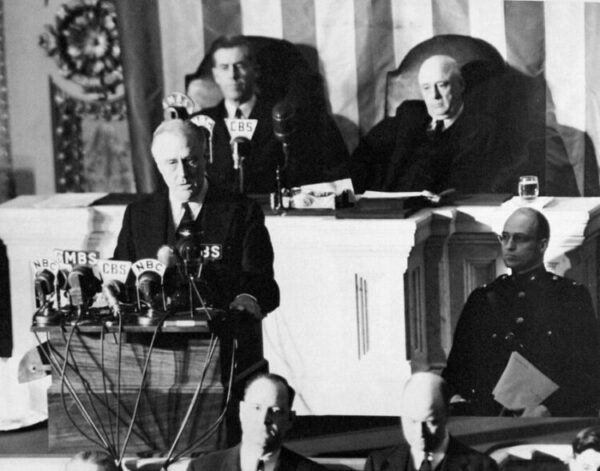
CBS News Radio stopped broadcasting today after nearly a century on the air. Not because it failed — because someone decided it wasn’t worth keeping.
Bari Weiss, CBS News editor-in-chief, made the call in March. The official line: heavy competition from other news sources, need for viable solutions, tough decisions in a changing media landscape. The reality: another round of cuts at a network that’s been hemorrhaging credibility and staff for years. CBS Evening News is now in third place. The radio service — which delivered five-minute hourly updates to SiriusXM’s POTUS channel and dozens of other outlets — apparently didn’t fit the new business model.
The Network William S. Paley Built
Brooke A. Byers, William S. Paley’s granddaughter, wrote about the shutdown for The Guardian. Paley founded CBS. Built the radio network first, then television. Made it the “Tiffany Network” — a nickname that meant something back when standards existed. Edward R. Murrow’s WWII broadcasts, Walter Cronkite, and 60 Minutes. The crown jewel wasn’t the sitcoms — it was the news division.
Byers worked for Fred W. Friendly, the guy who created See It Now with Murrow, and later resigned from CBS News when the network chose to air I Love Lucy rather than cover the Vietnam War hearings. That was 1966. Different era, different priorities. Friendly cared more about informing the public than protecting ad revenue. Quaint.
Today, a US senator whom Byers spoke to didn’t know who Paley was.
That tracks — wait, no. That’s the kind of cultural amnesia you’d expect when institutions dismantle themselves piece by piece, and nobody bothers to remember why they mattered in the first place.
The Five-Minute Brief Nobody Wanted to Save
CBS News Radio delivered something increasingly rare: a five-minute news summary at the top of every hour. Reported from the field. No hot takes, no performative outrage, no algorithm-optimized engagement bait. Just the day’s essential stories in digestible form.
Byers called it “the most convenient and unassailable source of the objective version of the news.” She’s right. It was also cheap to produce relative to television operations, supported by national advertisers, and distributed across multiple platforms. None of that mattered.
Weiss said radio is “woven into the fabric of CBS News, and that’s always going to be part of our history.” Past tense. History. The kind of statement executives make when they’re about to delete something and want credit for acknowledging it existed.
The March cuts followed October layoffs. The pattern is consistent: reduce staff, eliminate services, watch the audience shrink, blame market forces, repeat.
When Television Didn’t Kill Radio
In 1948 — when television was the disruptive new medium threatening to obliterate everything else — Paley wrote this in CBS’s annual report to shareholders:
“The long history of mass media in this country has amply demonstrated that the rise of a strong new medium does not tend to displace any of the others. No mass medium has ever disappeared … each of them has given enormously as the nation itself has grown.”
He was describing coexistence. Radio adapted when TV arrived. Both thrived. The idea that one format must die for another to succeed is recent — a product of consolidation logic and private equity thinking, not media history.
Byers believes radio can still play an important role “if given the chance — and the resources.” She’s correct. But that requires executives who value the thing they’re managing, not just the quarterly earnings report.
What Gets Lost
CBS News Radio survived the Great Depression, WWII, the Cold War, Watergate, 9/11, and the entire internet revolution. It didn’t survive Bari Weiss’s cost-cutting memo.
The shutdown isn’t about technological obsolescence. It’s about priorities. A five-minute news brief delivered on the hour is inconvenient for a media landscape optimized for engagement metrics and viral moments. It doesn’t generate clicks. It doesn’t drive subscriptions. It just… informs people. Efficiently. Reliably.
Apparently, that’s not enough anymore.
Murrow used to sign off with “Good night and good luck.” Byers ended her piece with the same line. It reads differently now — less like a friendly farewell, more like a warning about what happens when institutions stop believing in the work that made them matter.
Here is the very last broadcast from yesterday evening.