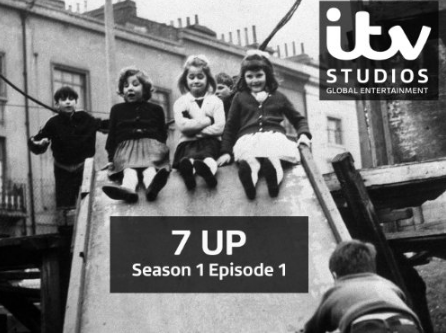
In 1964, a British TV crew pointed cameras at fourteen seven-year-olds and asked them about their dreams.
Tony wanted to be a jockey. Neil wanted to be an astronaut. Bruce wanted to be a missionary.
Then they came back seven years later. And seven years after that. And again. And again—every seven years for seven decades—until those kids became 70-year-olds with grandchildren, mortgages, divorces, careers, regrets, and the kind of life-worn faces that only time can carve.
The ‘Up’ series—nine films spanning 1964 to 2026—is ending with 70 Up, and it’s the kind of documentary achievement that will never be replicated because no one has the patience anymore.
Not the filmmakers. Not the audience. Not the participants.
But somehow, this one survived.
The Concept Was Simple—The Execution Was Absurd
The premise: follow the same people every seven years to see how class, geography, and circumstance shape their lives.
No gimmicks. No manufactured drama. Just check-ins—like running into an old friend at the grocery store, except the friend is also a sociological experiment and millions of people are watching.
Director Michael Apted helmed the series from 1970 until his death in 2021, which means he spent 51 years of his life returning to the same fourteen people. Imagine committing to anything for that long—marriage, a job, a gym membership. Most people can’t make it through a streaming series without bailing halfway through season two.
But Apted kept showing up. So did the participants—most of them, anyway. Charles bowed out at 21. Nick, a farmer’s son-turned-nuclear physicist, died in 2023. Lynn passed away before 70 Up could be completed.
The new director, Asif Kapadia—who made Senna and called the ‘Up’ series his favorite documentary of all time back in 2014—now has the unenviable task of closing out a project that predates him by decades.
What Makes It Work: No One Tries Too Hard
The brilliance of the ‘Up’ series is its refusal to be clever.
No voiceover narration explaining what you should feel. No dramatic music cues. No “where are they now?” tabloid energy. Just people aging in real time, talking about their lives with the kind of unvarnished honesty that only comes from being filmed so many times you forget the camera is there.
Tony, the cheeky London cabbie who wanted to be a jockey, ended up driving a cab. Neil, who dreamed of being an astronaut, experienced homelessness. Symon fostered more than 120 children and now has 12 grandchildren.
Some lives turned out predictably. Others didn’t. But all of them—every single one—became a document of how time works when you’re not paying attention.
Producer Claire Lewis, who worked on the series for over 40 years, called it “pure magic” and said the participants became a second family. Which makes sense—you can’t film someone every seven years for seven decades without becoming entangled in their life.
The Part No One Talks About: The Participants Had to Keep Saying Yes
Think about what it takes to stay in this thing.
Every seven years, a film crew shows up and asks you to explain your life—your marriage, your career, your regrets, your kids, your failures—on camera. And you know millions of people will watch it. And you know they’ll compare you to your younger self. And you know some of them will judge you for not becoming the person you said you’d be when you were seven years old.
Most people would tap out after the second or third round. But these fourteen—well, the ones who stayed—kept showing up. Some of them hated it. Some of them found it cathartic. But they all understood they were part of something bigger than themselves.
Jo Clinton-Davis, ITV’s Controller of Factual, said the series “made me want to get into television” and called it “a document of our times”. Which is a polite way of saying: this thing captured something no algorithm or focus group ever could—the slow, grinding, beautiful, boring reality of being alive for a long time.
Why This Will Never Happen Again
Streaming platforms don’t have the attention span. Neither do audiences. Neither do filmmakers.
Everything now is designed for the short game—binge-worthy, algorithm-optimized, built to trend for a week and then disappear. The idea of committing to a project that won’t pay off for 70 years is laughable in an industry where executives get fired if a show doesn’t hit its numbers in the first weekend.
But the ‘Up’ series worked because it was the opposite of that. It was patient. It was humble. It trusted that people would care about other people’s lives if you just pointed a camera at them and let them talk.
And it turns out—people did care. For 70 years.
Kapadia said working on 70 Up was “a dream project” and called the series “the ultimate portrait of human life”. He also said he watched it growing up in East London with his parents and siblings—which means the series outlived entire generations of viewers and filmmakers.
That’s the legacy. Not the awards or the critical acclaim—though there’s plenty of that—but the fact that it existed long enough to become part of the cultural fabric.
The Ending No One Wanted But Everyone Knew Was Coming
70 Up will air later in 2026, and it will be the last one.
Not because the participants are done—though some of them are, literally, gone—but because the series has reached its natural conclusion. You can’t keep filming people every seven years forever. Eventually, time wins.
Lewis said she’s “sad and content at the same time” that it’s ending, which is probably the most honest way to describe watching something you’ve poured your life into finally close.
The series won’t have a tidy ending. It won’t wrap up every storyline or answer every question. It’ll just… stop. Which is exactly how life works when you’re not trying to turn it into content.
And maybe that’s the point.
Photo Courtesy: IMDB