There’s nothing quite like having a drink to celebrate payday — turns out this tradition dates back 4,000 years, and the receipts are literal.
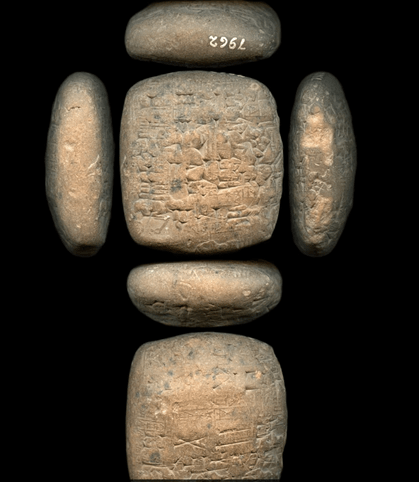
Scientists at the National Museum of Denmark have just deciphered a clay tablet from ancient Umma (modern-day southern Iraq) that records beer payments to workers. Not a bonus. Not a perk. Payment. Someone named Ayalli was handing out 16 liters of “high quality beer” and 55 liters of “ordinary beer” to a crew — roughly 71 liters total, distributed among the team.
The tablet is essentially a beer tab from 2000 BCE. A receipt. Proof of transaction. And it confirms what we’ve always suspected: people have been negotiating compensation in alcohol since the dawn of civilization.
Beer Wasn’t a Treat — It Was the Economy
Dr. Troels Arbøll from the University of Copenhagen explained that beer wasn’t just a morale booster — it was nutritional currency. “Beer was presumably high in nutrition and considered an integral part of how these earliest urbanized populations lived,” he told the Daily Mail.
Translation: beer wasn’t the office keg. It was the paycheck.
The distinction between “high quality” and “ordinary” beer suggests a tiered compensation system — management got the craft brew, laborers got the equivalent of warm Natty Light. Some hierarchies are eternal.
What Ancient Beer Actually Tasted Like
If you’re imagining a crisp IPA or a smooth lager, recalibrate. Ancient beer was sour, tangy, flat, and fruity — with a thick, milky texture and notes of sediment or clay. It was brewed from fermented bread, sometimes sweetened with honey or dates, and had an alcohol content of 3.5-6.5 percent.
You drank it through a long straw to avoid the floating grain remnants. Sophisticated.
Tate Paulette, a history professor at North Carolina State University, has written extensively about Mesopotamian drinking culture. “If you could travel back in time to one of the bustling cities of ancient Mesopotamia, you would have no trouble finding yourself a bar or a beer,” he noted.
Beer was everywhere. To be Mesopotamian was to drink beer — a cultural constant that transcended class, occupation, and era.
The Hangover Was Also Eternal
Mesopotamian literature reveals that drinking this beer could lead to confusion, loss of control, poor judgment, and — naturally — feeling horrible the next morning. Sexual dysfunction was also documented.
So the ancient worker experience was: get paid in beer, drink the beer, wake up regretting the beer, then go back to work to earn more beer. The cycle was airtight.
More Than Just Beer Tabs
The National Museum of Denmark’s collection includes thousands of cuneiform tablets — the earliest known writing system, dating back 5,200 years. Researchers from the University of Copenhagen recently analyzed, identified, and digitized as many as they could find.
Among the discoveries: medical treatments, magical incantations, letters, accounts, and a regnal list describing both mythical and historical kings.
One tablet contained an anti-witchcraft ritual designed to protect Assyrian kings from political instability. The ritual took all night and involved burning wax and clay figures while an exorcist recited incantations. High-stakes HR.
Another tablet originated from a temple library in Hama, Syria — proof that ancient bureaucracies were just as obsessed with documentation as modern ones.
Why This Matters
The beer tab isn’t just a curiosity — it’s a window into how ancient societies structured work, value, and survival. Beer was nutritional. Beer was social. Beer was an economic infrastructure.
Dr. Arbøll emphasized that these tablets reveal “a highly developed bureaucracy” with complex administrative systems. Someone had to track who got paid, how much, and in what quality of beer. The spreadsheet existed 4,000 years ago — it was just made of clay.
And the fact that workers were compensated in beer rather than grain or livestock suggests something deeper: beer was trusted, portable, and universally valued. It was liquid capital.
The Tradition Lives On
Some places — like the Great Lakes Brewing Company in Cleveland, Ohio — have tried to recreate ancient beers for modern drinkers. The results are… educational.
But the real legacy isn’t the taste. It’s the tradition. The idea that work deserves reward, that reward can be communal, and that sometimes the best way to mark the end of a hard day is with a drink — even if it’s thick, sour, and requires a straw.
Mesopotamia understood this 4,000 years ago. We’re still catching up.
Photo by: Troels Arboll & National Museum of Denmark