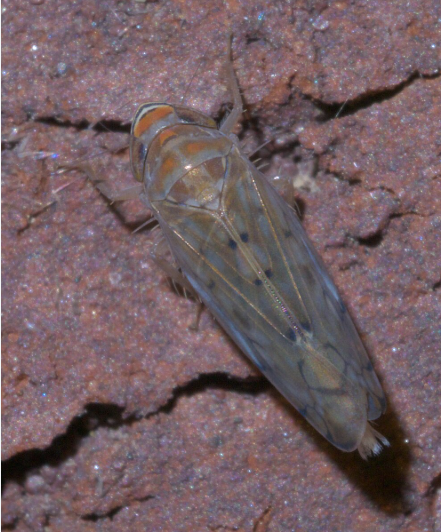
It started with a box of radicchio.
One of thousands that pass through the Port of San Luis every week.
But this one had a passenger.
During a routine inspection, U.S. Customs and Border Protection’s agricultural specialists found something they’d never seen before — a leafhopper called Osbornellus sallus. For the record, that name had never appeared in any U.S. database. This was the insect’s first documented appearance on American soil.
And while that sounds like trivia for entomologists, it’s not. It’s a moment that says everything about how fragile our biosecurity really is — and how one overlooked bug could rewrite an ecosystem.
The People Behind the Discovery
The inspection itself was standard — part science, part detective work. Agricultural specialists are the quiet heroes of the border. They’re trained to spot the microscopic stuff most of us would never notice. A blemish on a leaf, a twitch of movement in the corner of a crate, a sound like paper tearing.
When they found the leafhopper, they didn’t shrug it off. The specimen was packed up and sent to the USDA’s National Identification Service, where the verdict came back clear: new species, never before recorded in the U.S.
For them, it was a win. For the rest of us, it was a warning.
Why It Matters
A leafhopper doesn’t sting or bite or chase people around backyards. What it does is far more efficient — it drinks plant sap. And while doing that, it spreads pathogens that can wipe out crops. Grapes, grains, lettuce, citrus — you name it.
If that bug had hitched a ride past inspection and survived, it could have found new plants to feed on, and with no natural predators here, it would’ve spread like gossip in a small town. That’s how invasive species work: quietly, invisibly, until one day they’re everywhere and too expensive to get rid of.
We’ve been through this before — zebra mussels in the Great Lakes, giant African snails in Miami, lanternflies creeping up the East Coast. Every one of those stories started with a single specimen.
The Global Trade Problem
The uncomfortable truth is, this was bound to happen.
Global trade moves faster than biology can adapt. Every box of produce, every pallet of lumber, every shipping container has the potential to carry something unintended.
It’s not about blame — not Mexico, not the growers, not the carriers. It’s about scale. When you have millions of shipments crossing borders every day, one leafhopper is all it takes.
That’s the paradox of modern trade: the same system that gives us fresh radicchio in October also opens the door for pests that could wreck entire industries.
What Happens After a Discovery Like This
Once a first-in-nation species is confirmed, the clock starts ticking.
USDA and CBP track the shipment’s source, notify agricultural authorities, and sometimes put the supplier on watch for enhanced screening. It’s not glamorous, but it’s the kind of work that prevents billion-dollar problems down the road.
They’ll monitor surrounding regions, look for signs of the insect, and maybe even adjust import inspection priorities. It’s the same pattern that’s played out for decades — intercept early, communicate fast, and hope that vigilance holds.
But here’s the part that doesn’t make headlines: the mental load of staying alert to what’s invisible. Inspectors have to imagine every piece of fruit or vegetable as a possible Trojan horse. Every crate, a new world waiting to be invaded.
The Bigger Picture
What makes this discovery interesting isn’t the bug itself — it’s what it represents.
We’re seeing more of these “firsts.” A warming climate expands habitable zones. Global shipping keeps multiplying. And natural borders, the kind that used to stop certain species, are weakening.
It’s a game of chance and probability, except the stakes are real — food prices, export markets, livelihoods. A single species introduced at the wrong time can reshape an entire industry.
If that sounds dramatic, remember that Florida’s citrus greening crisis started with a tiny insect, too. Billions in losses, farms shuttered, traditions uprooted.
Why It Resonates
This story works on several levels.
It’s nature, trade, and risk all tangled together — a reminder that our economy isn’t separate from ecology, it’s built on top of it. It’s also a glimpse into the invisible labor of people who protect that balance.
There’s poetry in the idea that a bug no bigger than a paperclip can make headlines for breaching a border. But there’s also a truth here that’s hard to ignore: in an interconnected world, security isn’t just about people or money or data. It’s about biology.
The border is a living system too — one that filters what enters and exits not just by passport, but by species.
What Comes Next
For now, the threat is contained. The shipment didn’t make it through. The bug was identified, logged, and neutralized. But there’s no permanent victory in this kind of work. Only the next inspection, the next shipment, the next maybe.
That’s the quiet rhythm of biosecurity — one win at a time.
So the next time you see a truckload of produce glide through customs or pick up imported greens at a grocery store, consider the hidden choreography keeping those foods safe. Somewhere between field and fork, a human being noticed something small that didn’t belong — and by doing that, may have saved a harvest we’ll never know we almost lost.