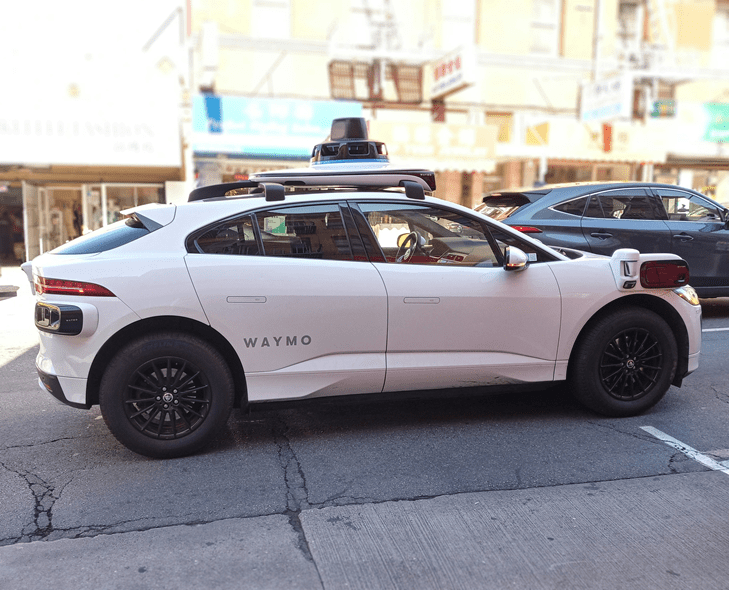
Di Jin had never ridden in a driverless taxi before Monday. The South Bay businessman booked a Waymo to San Jose International Airport — a routine trip, uneventful right up until the moment he stepped out of the car and the trunk refused to open.
Then the robotaxi drove away. With his suitcase still inside.
“I pressed the trunk open button, tried to get my luggage, but it didn’t do anything, and it drove away immediately,” Jin told NBC Bay Area. Within seconds, everything he needed for his San Diego trip — clothes, work notes, the basic infrastructure of a business trip — was gone.
When Customer Service Is Also Autonomous
Jin called Waymo support, hoping for a quick U-turn. Instead, he learned the car was already en route to its depot and could not be stopped. No override. No manual intervention. Just a polite notification that his belongings were now in transit to a warehouse somewhere in the Bay Area.
So Jin boarded his flight empty-handed — no luggage, no clothes to change into, no work materials. Hours later, Waymo confirmed they’d recovered his suitcase. Then came the punchline: “While we would love to get this item back to you as quickly as possible, Waymo is unable to cover the cost of shipping labels or courier fees.”
The company offered two options. Jin could pay to have his belongings shipped back. Or — and this is where the Waymo trunk malfunction story tips into absurdist territory — he could use two complimentary Waymo rides to travel to the depot and retrieve them himself. A two-hour round trip.
“It sounded terrible,” Jin said. “It doesn’t make any sense at all, because it’s not my mistake.”
The Fine Print on Lost and Found
Waymo’s website states the company “is not responsible for items left behind in the vehicle after your trip ends and does not provide refunds or reimbursement for the value of lost items.” Standard language for ride-hailing services — except Jin didn’t leave anything behind. The trunk malfunctioned. He pressed the button. It didn’t open. The car left anyway.
According to Waymo’s own guidance, passengers can open the trunk via a button on the vehicle or in the app, and it should open automatically when a ride ends. Jin says he followed protocol. The system failed. And yet the policy treats this like a passenger error.
The Expansion Continues
San Jose International became the first commercial airport in California to allow paying passengers to use Waymo’s driverless rides in November. The rollout has been smooth — until incidents like this surface the gap between autonomous efficiency and human accountability.
There’s no driver to flag down. No one to yell at. No person in the loop can override a malfunctioning trunk latch or turn the car around. Just a customer service line that treats a mechanical failure like a lost-and-found situation and offers the aggrieved party a chance to spend two hours fixing the problem themselves.
For free, of course. Two rides. Very generous.
The Accountability Gap
Jin’s case isn’t about whether autonomous vehicles work — they mostly do. It’s about what happens when they don’t, and who’s responsible for the fallout. A human driver would’ve noticed the trunk didn’t open. A human driver could’ve circled back. A human driver wouldn’t have driven off with a passenger’s suitcase and then suggested the passenger spend half a day retrieving it.
But there is no human driver. There’s a system. And when the system fails, the response is a policy written for a different kind of failure — one where the passenger forgot something, not one where the car malfunctioned and left them stranded.
Waymo has yet to comment publicly on Jin’s case. The Daily Mail reached out for further comment. As of now, the luggage remains in the depot, the passenger remains in San Diego, and the Waymo trunk malfunction remains unresolved.
Source: NBC Bay Area