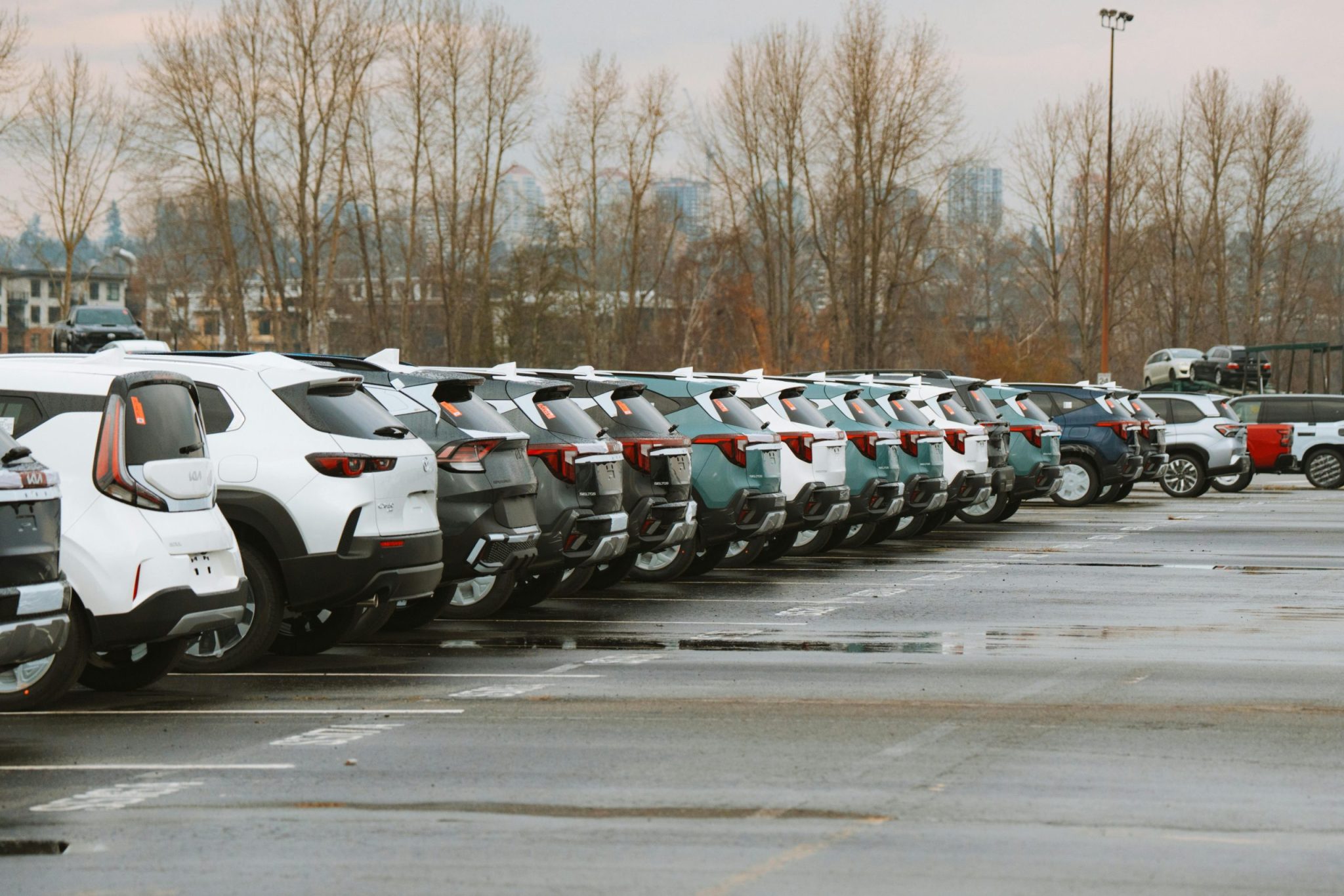
If you want to know how the American economy is really doing, don’t look at the stock market. Look at the parking lots behind the repo yards.
Tow trucks are working overtime again across the country. The numbers are grim: analysts at CURepossession, using Recovery Database Network data, project that more than 3 million cars could be repossessed in 2025 — the highest total since the 2008 financial crisis. In the last three months of this year alone, over 820,000 vehicles are expected to be seized.
Economists call it “consumer distress.” On the ground, it looks like missing work, explaining things to your kids, and taking the bus with a bag of groceries.
The warning lights are flashing red.
The New American Default
Auto loans have quietly become one of the most enormous debt mountains in the country — $1.66 trillion, more than credit cards or federal student loans. And those loans are getting ugly.
Fitch Ratings reports that 6.43% of subprime borrowers — Americans with weak or no credit — are at least two months behind on their payments. That’s double what it was in 2021 and worse than during COVID, the dot-com bust, or the Great Recession.
And this is before most economists expect a slowdown.
The logic used to be simple: when times get tight, people stop paying the credit card before they stop paying for the car. A house can wait — a job can’t. No car means no income. But even that logic is breaking down now.
When your car payment is $749 for a new one or $529 for a used one, and insurance premiums are jumping 20% a year, the math doesn’t work.
How We Got Here
Kevin Armstrong, who literally wrote the book on the topic — Repo Blood: A Century of Auto Repossession History — calls auto delinquencies “one of the canaries in the coalmine.”
He says the setup began during the pandemic. “When COVID hit, prices went through the roof. I watched people paying outrageous amounts for cars that weren’t going to hold their value, and the dealers laughing all the way to the bank.”
Those stimulus checks and unemployment boosts gave millions of Americans temporary spending power. Dealerships saw record sales, even as supply chains made vehicles scarce. People paid above sticker price for used sedans that would be worth half that three years later.
Now those same buyers are underwater — owing more than their cars are worth — and can’t sell even if they want to. It’s a trap built on good intentions and bad timing.
Meanwhile, Ford and other manufacturers have quietly tiptoed back into risky lending to keep sales alive. Ford recently started offering low-interest loans to customers with credit scores under 620. When the nation’s most iconic car company starts flirting with subprime again, you know the pressure’s real.
The Domino Theory
Subprime auto lender Tricolor filed for bankruptcy last month. Shortly after, auto-parts supplier First Brands collapsed under a $2 billion accounting hole. JPMorgan Chase CEO Jamie Dimon didn’t mince words: “When you see one cockroach, there are probably more.”
He’s not wrong.
Subprime lenders are often the first to fall when the economy turns — their customers feel the squeeze first, and their investors panic fastest. That’s exactly how the housing crash started in 2008. The mechanics are different, but the psychology is identical: easy credit, inflated prices, and a belief that someone else will absorb the risk.
But the someone else is always us.
The Illusion of Prosperity
While Wall Street cheers record highs, Main Street is gasping for air. The split feels familiar — the illusion of prosperity masking an exhausted middle class.
You can’t square a roaring stock market with the fact that millions of working Americans can’t keep their cars. The contrast isn’t just economic; it’s moral.
Car ownership isn’t a luxury in the U.S. It’s survival infrastructure. People use their cars to get to work, to take their kids to school, to grab groceries in neighborhoods with no sidewalks or buses. When those cars vanish, entire lives collapse.
The repo numbers aren’t about delinquency — they’re about desperation.
A missed payment is rarely a choice. It’s a triage decision: medicine or gas, rent or repairs, child care or insurance. And for many, that’s a decision made every month.
What Happens Next
Economists fear this surge in repossessions could signal something bigger. When car owners default, it often precedes trouble in other sectors. It’s the first domino in a chain that can lead to credit card defaults, mortgage stress, and eventually recession.
If history rhymes, we’re hearing the opening bars.
The warning signs are eerily familiar: inflated asset prices, loose lending, and consumers hanging on by their fingertips. What’s different now is how compressed the timeline is. Stimulus-fueled demand spiked overnight during the pandemic, supply chains broke, prices exploded, and now the bills are coming due all at once.
In 2008, the cracks began in mortgage-backed securities. In 2025, the weak spot could be subprime auto loans — a $400 billion market hiding in plain sight.
The Human Math
Drive past any repossession lot and you’ll see the most accurate snapshot of American life: minivans with child seats, old pickup trucks with work gloves still in the cab, sedans with faded university stickers. These aren’t reckless spenders; they’re the backbone of the economy, stretched to the breaking point.
The irony is that the people losing their cars are the ones who need them most. Creditors can call it collateral; families call it oxygen.
When we start repossessing oxygen, it’s time to ask who the economy is really working for.
The Bottom Line
We’ve seen this movie before. The first act looks manageable — a “contained” problem, a few bankruptcies, some worrying data points. Then the contagion spreads.
Jamie Dimon’s “cockroach” analogy might sound crude, but it’s accurate. Economic rot rarely stays confined to one cupboard.
It’s tempting to dismiss the repo surge as a niche issue for subprime borrowers. That’s the same mistake made with subprime housing. The car market is a proxy for confidence — for how ordinary people experience the system. And right now, that confidence is running on fumes.
So when you hear that the Dow hit another record high, remember the sound outside the repo yard — engines starting, one by one, headed for storage.
That’s what the end of the line sounds like.