
On Tony Dokoupil’s first night anchoring the CBS Evening News, the show briefly stopped pretending it wasn’t live.
The moment came during a transition. Dokoupil moved from one segment to the next and discovered — in real time — that the handoff wasn’t where he expected it to be. The rhythm broke. The words didn’t land. There was a pause long enough to be noticeable, but not long enough to become a spectacle.
Dokoupil filled it the way people often do when the script disappears: by naming the situation. “First day,” he said. “Big problems.”
Then he kept going.
It happened on air. It wasn’t hidden. It wasn’t bleeped. It wasn’t framed as a joke or a meltdown. It was a working anchor encountering a working problem on his first night in a new chair, under lights that don’t wait.
Later, when CBS posted the broadcast online for streaming, that moment was gone.
The pause was smoothed over. The transition now worked. The version that remains looks like what television prefers to remember itself as: continuous, controlled, unbroken. The edit wasn’t announced. There was no note attached. The broadcast simply existed in two forms — the one that aired and the one that stayed.
Click The Image To Watch The Clip
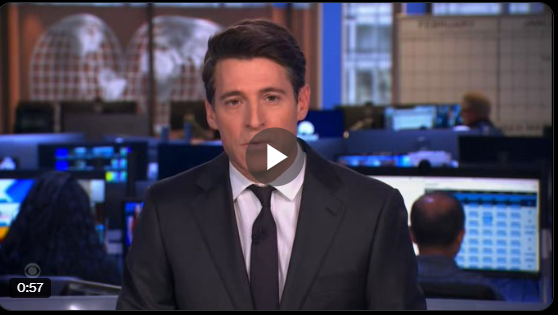
That difference is the story.
Dokoupil wasn’t new to television. He wasn’t unprepared. He wasn’t flailing. He was doing something that looked easy only because it usually worked. The machinery failed just enough for the viewer to see it, and just long enough for the anchor to acknowledge it without apologizing.
What followed wasn’t a correction. It was a revision.
CBS didn’t protect viewers from confusion. The confusion had already passed. They protected the desk. The anchor. The idea that the evening news proceeds forward without friction, even on night one, even when the person sitting there hasn’t yet learned exactly how the show wants to move.
First nights are when that contract gets written. The anchor learns where the pauses are allowed. The control room learns how the anchor reacts when something slips. The audience learns how much reality is permitted before it gets sanded down.
In this case, the sanding happened after the fact.
The version of the broadcast that remains online suggests that the problem never occurred — that the anchor moved cleanly from one item to the next, as if the recalibration had never occurred. But it did. Viewers saw it. Clips circulated. The live version didn’t vanish just because the archived one was tidied.
There’s no scandal here. No offense. No breach. Just a small collision between how live television actually works and how broadcast television prefers to look once it’s no longer live.
Dokoupil’s line wasn’t defensive. It wasn’t self-deprecating. It was informational. Something went wrong. This is the first night. We’re still moving.
That kind of acknowledgment used to disappear with the air itself. Now it survives long enough to be noticed — and long enough for the institution behind it to decide whether it wants that moment to count.
CBS decided it didn’t.
The edit doesn’t make the broadcast better or worse. It just reveals a familiar instinct: if a moment doesn’t fit the shape of the show, remove it from the record. What matters is that the record no longer matches the experience.
The anchor adapted in public. The network adapted afterward.
That gap — between what happened and what’s preserved — is where live television still shows its seams.