I was reading a piece in MIT Technology Review the other day — here’s the link since credit matters: https://www.technologyreview.com/
— and the thing stuck with me wasn’t the technical trick Securus built. It wasn’t the “detecting contemplated crimes” angle either.
What stopped me was the quiet part: inmates are paying to keep the surveillance tools running.
MIT Tech Review did the legwork on this story, talking to Securus leadership, rights groups, the FCC, and everyone orbiting this strange triangle between telecom money, incarceration, and unchecked AI. But the piece lands differently when you sit with the economics behind it.
Securus trained an AI model on years of Texas prison calls, then expanded to other states. That’s the surface layer. Beneath that is the fact that every one of those calls cost money — money inmates and families have to scrape together. And now, after some regulatory maneuvering, those same fees can be used to build, maintain, and grow the AI that scans their conversations.
It’s a setup that shouldn’t sit right with anyone.
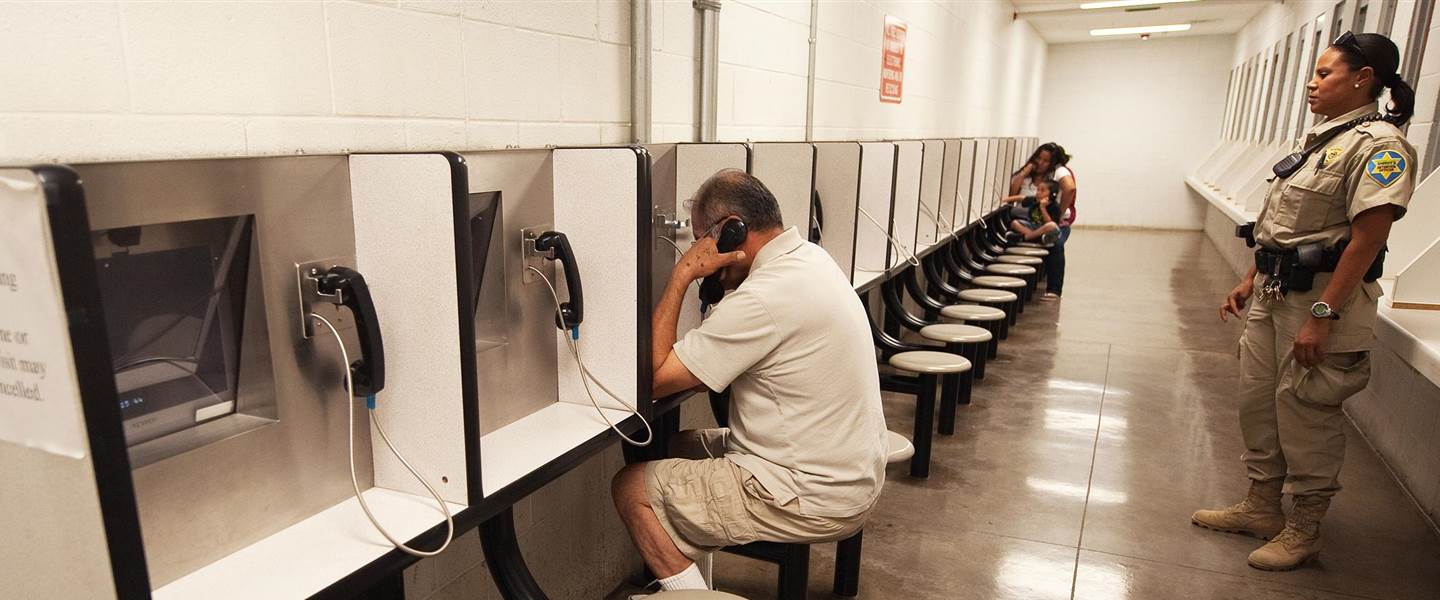
The company says the system flags “patterns” and “anomalies,” which is always a fun pairing of words that never explains much. They insist it’s not targeting individuals. Which might sound reassuring until you remember these callers can’t opt out, can’t switch carriers, can’t wait for a seasonal sale. Their only path to human connection runs through a system that records them and then feeds their voices back into the machine.
Advocates quoted in the reporting — Bianca Tylek, Corene Kendrick, people who actually spend time in courtrooms and community centers — point out how little oversight exists here. Courts haven’t set boundaries. Lawmakers barely understand what the technology does. And companies aren’t obligated to show their math.
And then the regulatory shoe drops.
MIT Technology Review’s reporting walks through how the FCC originally put limits on passing surveillance costs to inmates, then backed off, then opened the door wide in a later vote. Telecom companies argued security costs were too heavy, sheriffs complained they couldn’t monitor calls, and suddenly we’re in a world where AI surveillance inside prisons might be largely funded by the people being surveilled.
This is the kind of thing that only happens when the public isn’t looking.
So yeah, I keep thinking about the families loading money onto phone accounts, not realizing those minutes aren’t just buying a conversation — they’re underwriting a predictive policing model. They’re paying for the system that might flag their son, their sister, their dad, their friend.
The bigger problem is that AI keeps sliding into places with no daylight. Not consumer apps. Not Silicon Valley demos. Places where the people being analyzed have near-zero public visibility and even less political power.
MIT Technology Review’s story gets to that point indirectly, but it’s the part echoing in my head: when AI moves into closed systems, who’s watching the watchers?
Transparency can’t be optional. Accuracy can’t be proprietary. And families shouldn’t bankroll tools built to scrutinize them.
We keep inventing smarter systems. Great. But somebody has to decide how they’re used, who pays, who’s protected, and who’s left with no voice except on a monitored line that trains a model they never agreed to.
And yes, that’s the part nobody’s talking about.