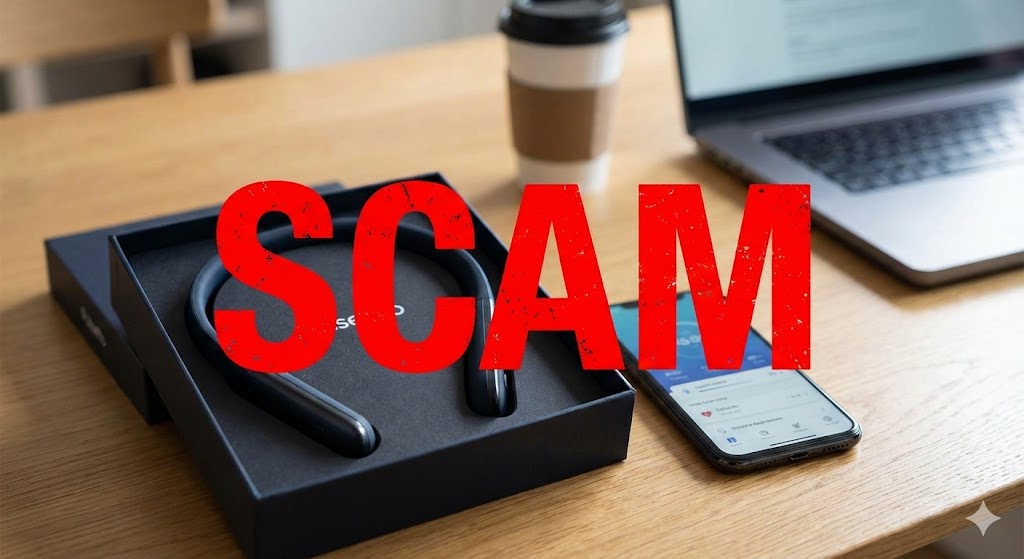
Scam of the Week: When Your Free Trial Starts Before the Box Arrives
I should say this up front, because it matters.
The Pulsetto device works. The vagus nerve stimulation does what it claims. The technology isn’t the problem. The billing is.
I ordered a Pulsetto on December 25th. It arrived January 10th — 15 days later. I used it for five days. On January 14th, I was charged $45.09 for a “Premium App” subscription I didn’t authorize.
The subscription came with a “28-day free trial.” Except that the trial didn’t start when the device arrived. It started when I clicked “Buy.”
Do the math. The product shipped late, but the company was upfront about it because of holiday demand. I received it 15 days into my “free” trial. That left me 13 days to evaluate whether the premium app features were worth $45 every billing cycle. Not 28 days. 13 days. But wait, I was charged the full amount on the 22nd day since I first placed the order. Are you confused? Me too!!
This is a scam. Not in the illegal sense. In the design sense.
The Structure of the Trap
Here’s how it works. You buy the device. The company immediately starts the clock on your trial period. Shipping takes as long as it takes. Weather delays it? Trial keeps running. Warehouse backlog? Doesn’t matter. Holiday logistics? Not their problem.
By the time the device reaches your door, the trial window has narrowed to almost nothing.
You open the box. You set it up. You try the basic features. You consider upgrading to premium. Then the charge hits before you’ve decided anything.
The company isn’t lying about the 28 days. They’re just measuring them from a starting line you can’t see and can’t control.
Both Things Can Be True
The device does what it promises. The vagus nerve stimulation helps with stress. The build quality is fine. The app interface works. None of that is in question.
What’s also true is that Pulsetto designed its billing structure to capture subscription revenue from people who never consciously opted in. The trial period is technically accurate and functionally meaningless.
That’s the gap. The one between what they say and what actually happens.
What Makes This a Pattern
This isn’t unique to Pulsetto. It’s everywhere now. Trials that start before delivery. Subscriptions buried three clicks deep in account settings. Cancellation flows that require phone calls to departments that close at 4 p.m.
Each one is technically legal. Each one is designed to make stopping harder than starting.
The companies know this. They’ve done the math. A certain percentage of customers will notice, complain, maybe get refunded. The rest will let it ride, forget to cancel, or assume they must have agreed to something.
That percentage is the business model.
The System Enforces Itself
Pulsetto doesn’t need aggressive sales tactics. They don’t need pushy emails reminding you the trial is ending. The calendar does the work for them. Shipping time eats your decision window. The default setting is “continue subscription.” Inertia handles the rest.
Nothing about this requires human intervention. It’s just a timer wired into the checkout process, counting down from a moment you probably weren’t paying attention to.
The device still works. I’m still using it. But I turned off premium, disabled auto-renewal, and set a calendar reminder for myself because apparently that’s my job now.
Both things can be true. The product delivers. The billing structure is designed to take your money before you’ve decided to give it.
Welcome to Scam of the Week — a new recurring feature where I pull apart the legal traps hiding in plain sight. If you’ve been caught by one, send it my way. The goal isn’t outrage. It’s visibility.